A professional guide to cleaning, seasoning, and restoring your kitchen’s most essential tool.
A solid wooden cutting board is the heart of every kitchen. Whether you own a heavy oak butcher block or a delicate olive wood artisan piece, your workspace requires more than just a quick rinse. Wood is a “living” material—when treated properly, it rewards you with natural antibacterial properties and a level of durability that plastic alternatives simply cannot match.
Here is everything you need to know to ensure your board serves you for decades, not months.
1. The Golden Rule: Never Invite Your Board to the Dishwasher
Let’s start with the most important point: the dishwasher is a death sentence for wood. The combination of high heat, prolonged soaking, and aggressive chemicals causes wood fibers to swell rapidly and then shrink as they dry. This leads to irreversible warping and cracking.
How to wash safely?
Always wash your board by hand under running warm water with a mild dish soap. The key is to wash both sides of the board, even if you only used one. This ensures the wood absorbs moisture evenly, preventing it from bowing or warping into a “U” shape.
2. Drying – Verticality Matters
After washing, never lay your board flat on the countertop. Water trapped underneath cannot evaporate, creating a breeding ground for mold and bacteria.
- Wiping: Immediately after washing, dry the board with a kitchen towel.
- Position: Let it air dry completely in a vertical position (propped against a wall or in a drying rack). This allows air to circulate freely around every surface.
3. Seasoning: “Feeding” the Wood
Dry wood is like a sponge—it absorbs meat juices, water, and odors. To prevent this, you must create a protective barrier.
What oil to use?
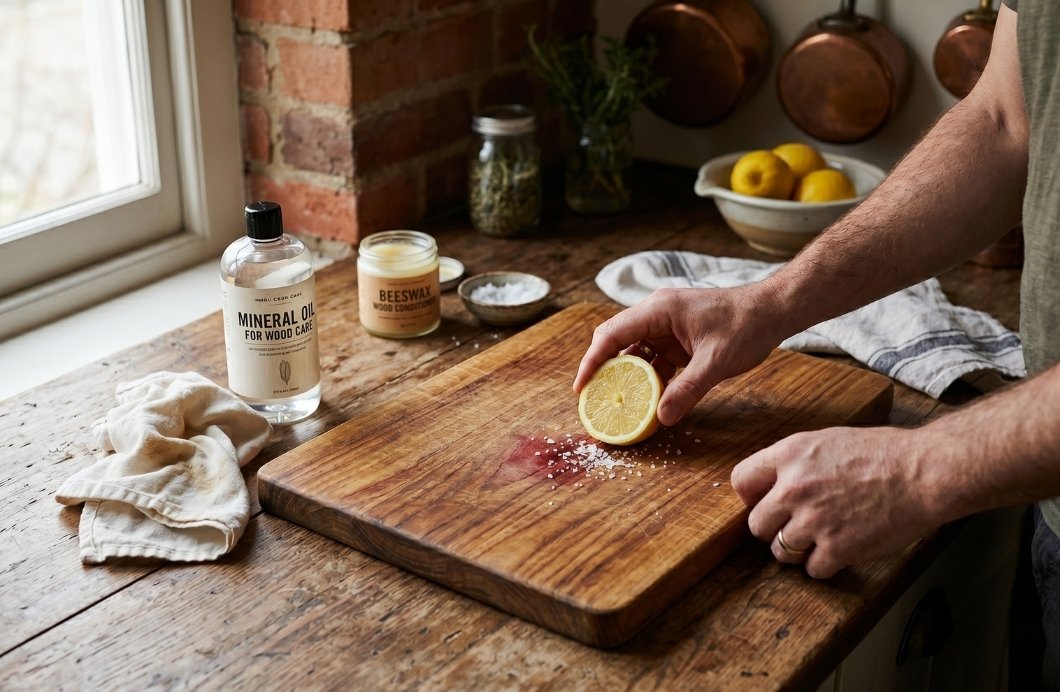
In Europe, the safest and most affordable solution is pure food-grade mineral oil (often found in pharmacies as “liquid paraffin”). It is odorless, colorless, and never goes rancid.
- Important: Avoid common cooking oils like sunflower or rapeseed oil. The organic fats within them eventually spoil inside the wood, resulting in a permanent, unpleasant smell.
How to do it?
Once a month (or whenever the board looks dull and feels “parched”), apply a generous layer of oil to the dry surface. Leave it for a few hours—ideally overnight—then wipe off any excess with a paper towel. Occasionally, you can use a beeswax conditioner to “seal” the pores and give the wood a beautiful, soft sheen.
4. Natural SPA: Salt and Lemon
Even a well-maintained board can occasionally pick up the scent of garlic or get stained by beets. Instead of reaching for harsh detergents, use natural chemistry:
- Sprinkle a generous amount of coarse salt over the board.
- Cut a lemon in half and use it as a “scrubber” to work the salt into the surface.
- Let the mixture sit for 10 minutes—the citric acid disinfects and brightens the wood, while the salt draws out moisture and lingering odors.
- Rinse and dry thoroughly.
5. What if Scratches Appear?
Wood has one major advantage over plastic: it is renewable. If, after a year of heavy use, the surface is deeply scarred by knife marks:
- Grab a piece of fine-grit sandpaper (180 or 240 grit).
- Sand the board following the direction of the grain until it is smooth again.
- Wash it, dry it, and perform an intensive oiling treatment. Your board will look brand new.
Summary: Your Board, Your Rules
Caring for wood is not a chore; it’s a sign of respect for your tools and your health. A smooth, well-oiled wooden board is the safest surface for food preparation.
Remember the simple ritual: Wash by hand, dry vertically, oil regularly. It’s that simple—and that essential—to enjoy the natural beauty of wood for a lifetime.