For years, plastic was a symbol of convenience. Today, more and more people are starting to look at it differently — not through fear, but through the lens of conscious choices about materials that come into contact with food.
This is not a trend. It’s a shift in how we think about everyday quality of life.
What should you know about plastic in the kitchen?
Research on food-contact materials shows that:
- some substances may migrate from plastics into food,
- this process can depend on temperature, time, and the type of food,
- special attention is given to long-term contact between plastic and hot or fatty foods.
This does not mean that all plastic is “bad” — but that not every type is ideal for every application.
Why are more and more people choosing glass, steel, and wood?
In everyday kitchens, what matters is not only convenience, but also the predictability of materials.
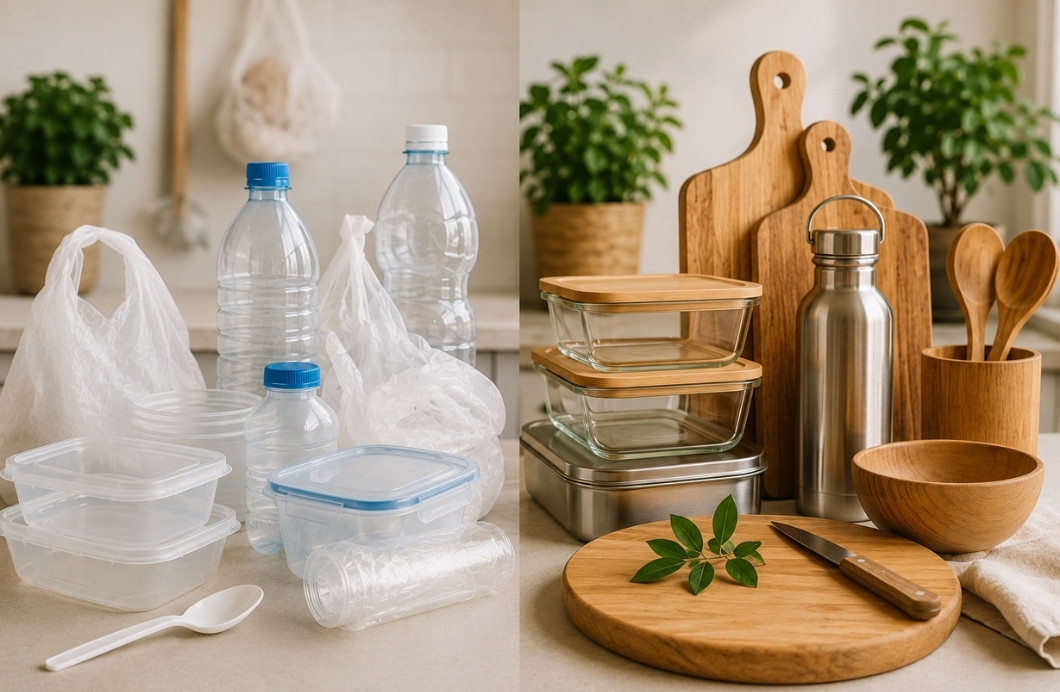
🥣 Glass
- chemically inert
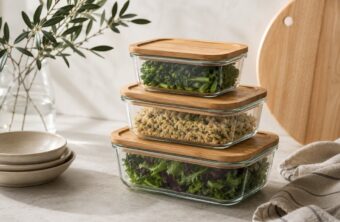
- ideal for storage and reheating
- does not react with food
🥄 Stainless steel
- durable and resistant
- great for storage and cooking
- widely used in professional kitchens
🌿 Wood
- natural material
- often chosen for cutting boards and kitchen tools
- very durable with proper care
Small changes that make a big difference
You don’t need to change your entire kitchen at once. It’s enough to start with the basics:
- replacing food containers with glass or stainless steel
- limiting reheating food in plastic containers
- choosing natural materials for cutting and serving
Natural kitchen in practice
In our “clean kitchen” approach, the principle is simple:
less random materials, more conscious choices.
That’s why in our store you will find products designed to replace plastic in everyday use:
- glass food storage containers
- stainless steel kitchen accessories
- wooden cutting boards and food preparation tools
This is not a revolution. It’s a return to materials that have stood the test of time.
Do you need to throw away all plastic?
No. A gradual approach is enough:
- first, items that come into contact with hot food
- then, everyday-use items
- finally, the rest of your kitchen equipment
Summary
A conscious approach to kitchen materials is not about fear, but about choosing quality and predictability.
Glass, stainless steel, and wood are simply materials that do not require “trust” — their behavior in contact with food is well understood and stable.